01
Pull pin and tamper seal
The pin comes out and the plastic tamper seal is cut. A broken seal on arrival says the unit has been handled since its last annual tag, so the charge gets checked whatever the gauge reads.
Stored pressure dry chemical units come apart at six years so the inside of the cylinder can be inspected, not just the outside.
Scroll, or step through it with the buttons, and a stored pressure dry chemical extinguisher comes apart one component at a time, in the order a technician takes it apart on the bench. NFPA 10 asks for this teardown once every 6 years on every stored pressure unit you own.
01
The pin comes out and the plastic tamper seal is cut. A broken seal on arrival says the unit has been handled since its last annual tag, so the charge gets checked whatever the gauge reads.
02
Hose and nozzle come off and get blown clear. The technician looks for cracking at the crimp and for packed powder in the horn, then refits and checks that air passes end to end.
03
The lever and carry handle come off with the valve. Both get checked for bends and for play at the pivot, because a lever that binds is the failure you find at the worst moment.
04
The gauge is removed and read against a test gauge. A needle sitting in the green proves nothing on its own, and a gauge that reads full on a half empty cylinder is one reason NFPA 10 asks for the internal at all.
05
The valve body comes off the cylinder and is stripped down. The o-rings and the valve stem seal are replaced, the threads are inspected, and the assembly goes back on to the manufacturer's torque.
06
A new tag goes on the neck and the month and year of this service are punched through the card stock. The punch is what the authority having jurisdiction reads first, and the six year internal is recorded on its own row.
07
With the valve out, the shell is inspected inside and out for corrosion, dents and gouges. Damage found inside the shell is what takes a unit out of service for good rather than sending it back to the bracket.
08
The siphon tube is pulled and inspected end to end for cracks, splits and blockage. A tube packed with caked powder discharges propellant and nothing else.
09
The powder is emptied out, checked for caking and moisture, then weighed back in to the charge printed on the nameplate. Contaminated powder is discarded instead of going back into the cylinder.
10
The base ring comes off so the foot of the shell can be checked where water sits. The cylinder stamp is read here: it carries the manufacture date that sets the 12 year hydrostatic test.
Part 01 of 10
The unit is drawn in SVG rather than photographed. Component geometry is representative of a stored pressure dry chemical extinguisher and not of any manufacturer's product. The license field on the tag is a placeholder, and the punched month and the year printed on the tag are illustrative rather than a record of any service. The cell punched on this drawing is September 2026, taken from the build date.
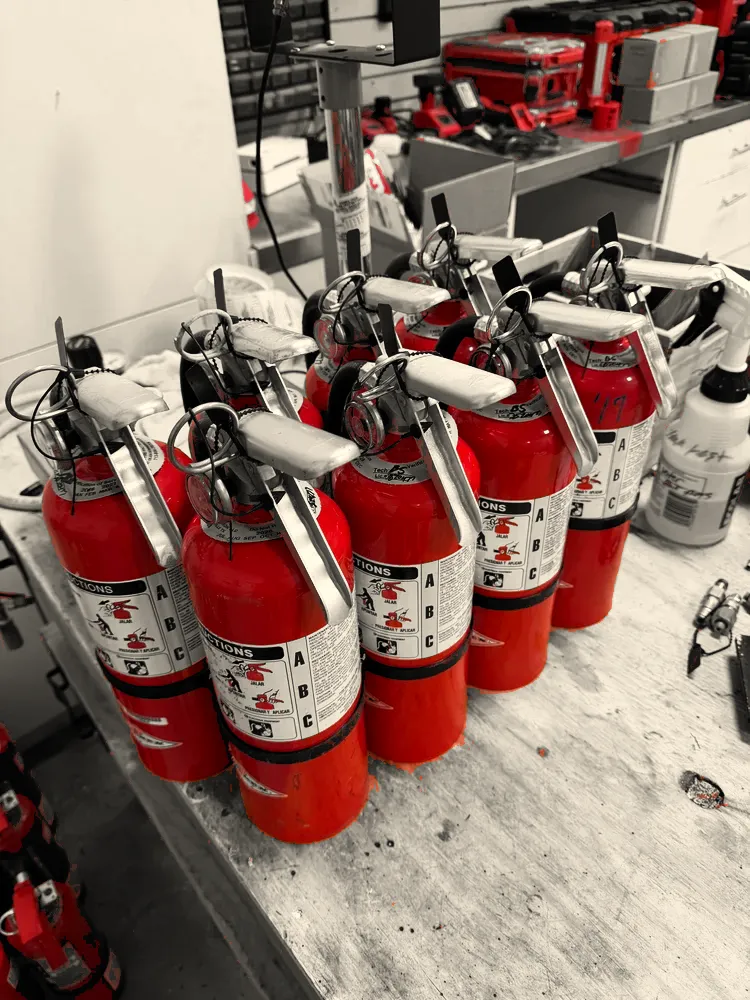
Performed in the shop by a licensed technician. Units are swapped so the building is never left below its required coverage.
Without the six year mark the annual tag does not hold up. An inspector who reads a current annual on a cylinder with no six year record will treat the whole set as unmanaged.
Read the compliance guideThe yearly tag on every unit in the building.
Any unit that has been discharged or found low.
Twelve year cylinder pressure test.
A written quote comes back before anything is scheduled.