On demand · NFPA 10 §7.3
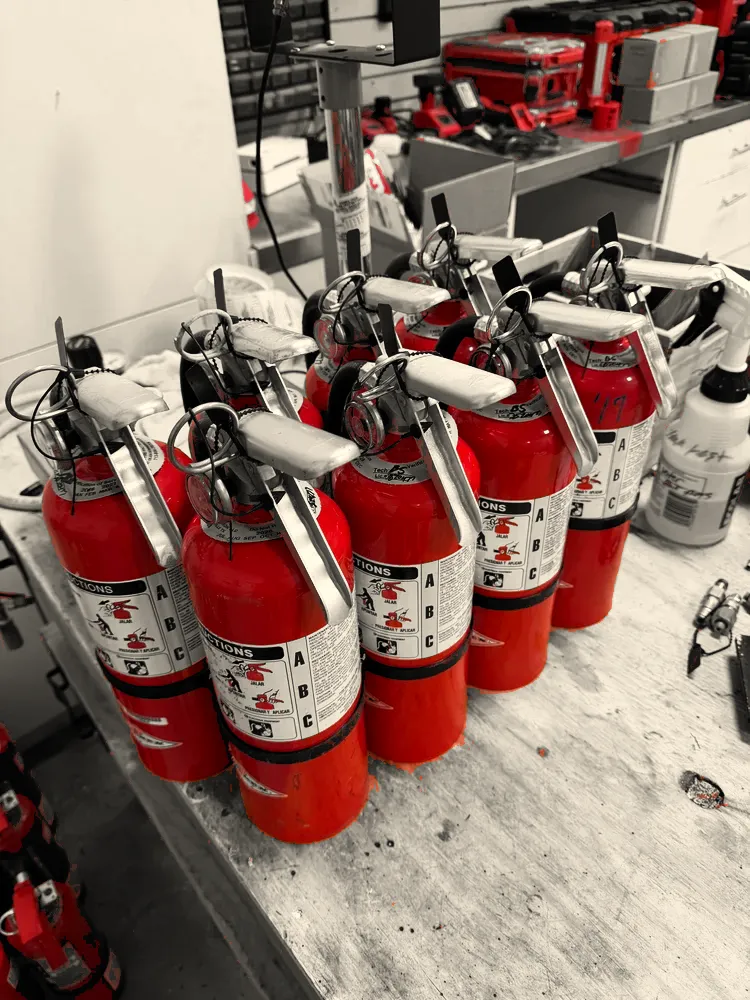
Fire extinguisher recharge and refill
Any unit that has been discharged, even briefly, is out of service until it is recharged. A partial pull counts.
Hamilton Fire ProtectionAS NEEDED
Recharge and refill
NFPA 10 §7.3
AFTER ANY USE
Performed byLicensed technician
Price per unitQuoted per site
What the service includes
Back to the rated charge, verified
StepWhat we check or replace
Discharge and inspectRemaining agent removed, shell inspected internally before refill.
Agent replacementRefilled to the stamped rated charge with the correct agent for the class.
Valve serviceValve stem, O-ring, and gasket replaced as part of the recharge.
RepressuriseCharged to the operating pressure marked on the gauge face.
Verification collarService collar fitted between the valve and cylinder as the record of recharge.
Who performs it
Recharge is performed by a licensed technician with the correct agent for the unit class and the manufacturer specification.
Technician licenseType B, portables only
If it lapses
What an inspector sees
A discharged extinguisher on a wall is worse than no extinguisher, because staff will reach for it. It is also a straightforward citation, and it makes every other unit in the building look unmanaged.
Read the compliance guideApplies to
- Any discharged unit
- IMMEDIATE
- Units found below charge
- REQUIRED
- After the 6 year strip
- INCLUDED
- Loaner while in shop
- AVAILABLE
Other services
The rest of the schedule
Hamilton Fire ProtectionANNUAL
Inspection and tagging
NFPA 10 §7.2
The yearly tag on every unit in the building.
Hamilton Fire Protection6 YEAR
Internal maintenance
NFPA 10 §7.3
Six year strip, internal inspection, and recharge.
Hamilton Fire Protection12 YEAR
Hydrostatic testing
NFPA 10 §8.3
Twelve year cylinder pressure test.
Send the site address and unit count
A written quote comes back before anything is scheduled.